LIBRARY

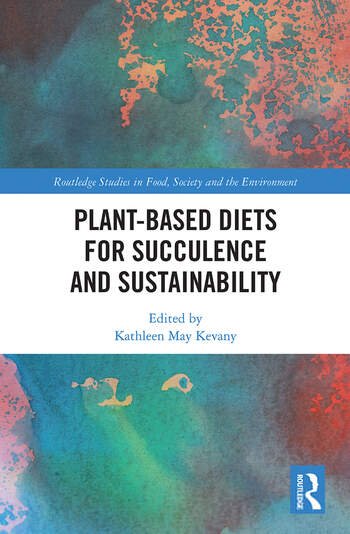
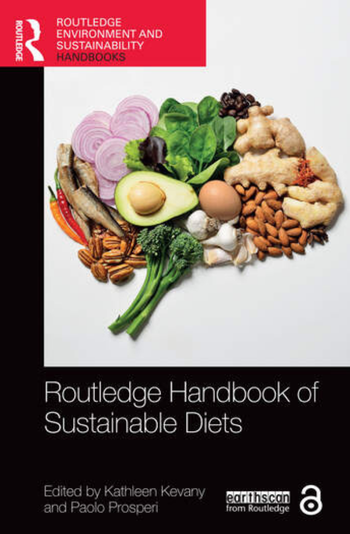
Edited By Kathleen Kevany, Paolo Prosperi

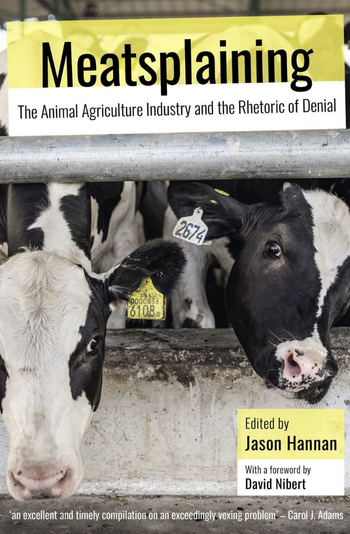
Meatsplaining, The Animal Agriculture Industry and the Rhetoric of Denial

Grass-fed lies, The mythology of sustainable meat, By Jason Hannan  in Routledge Handbook of Sustainable Diets

Add Your Heading Text Here

SSHRC IDG
  • Title: “Agricultural policies that support new farmers and sustainable diets: land trusts and co-operatives in the Canadian context”
  • PI: Talan and Kathleen 
  • Years active/awarded: 2025
  • Amount Awarded:
  • Public Summary:
SSHRC (Partnership Development Grant) PDG
  • Title: Transition through partnerships for sustainable diets: Food Procurement, Placement, and Possibilities
  • Director and Co-director: Kathleen Kevany and Howard Nye
  • Years active/awarded: 2024-2026
  • Amount awarded: $200K
  • Public summary
    • Summary: Humanity faces urgent challenges, including climate change, disease, and food insecurity, that demand systemic solutions. Institutional shifts in food procurement and environments, such as promoting plant-forward diets aligned with Canada’s Food Guide (2019), can address environmental, health, and equity crises simultaneously. These changes, especially in high-impact settings like schools and hospitals, offer significant social, economic, and ecological benefits beyond what individual actions can achieve. The Food Impact Network (FIN)  has emerged to connect the disparate efforts of implementing planetary healthy food systems and plant-forward menus and to build cross-sectoral alliances to seize opportunities and overcome challenges in aligning Canada’s food system with the 2019 CFG. Our partnership strategies include providing food coaching and research support to two hospitals and one university as they transition their food menus and advance their sustainability and client service goals. By working together, we can shift routine food selection through fostering changes in food environment design and food cultures, and learn more about the impact of food. 
  • Details: The Food Impact Network includes two co-directors, 17 co-applicants and collaborators, along with 15 partners that include our three pilot study sites and two organizations that will host four interns supported by Mitacs. This work also incorporates capacity building with 11 research assistants (RAs). Our objectives are framed into four work bundles (WB). WB1) Provide professional coaching to institutional food services on food environment design and food procurement and placement. Facilitate training of chefs and administrators on making plant-forward foods attractive and affordable. WB2) Collect data on patient/client food preferences through analyzing food consumption, and where feasible, waste levels. WB3) Use data collected from pilot sites and international databases to model potential health, environment, economic, and social impacts arising were institutions across Canada to adopt CFG. WB4) Undertake discourse analyses of public narratives, media messaging and social marketing for their influences on consumer food habits and institutional food practices. Formulate communication strategies to mobilize knowledge and shine light on the co-benefits arising from emphasizing plant-forward strategies. Additional benefits arising from this project to society are public institutions will have a national network with whom they can exchange ideas and advance their sustainability goals and integrate more ‘food as medicine.’ Benefits include applied student training, new research partnerships, and system changes that make the healthy choice alluring.
Associated Mitacs to PDG

Mitacs Accelerate Proposal Streamlined Application Mitacs-SSHRC Joint Initiative

  • Title: “Institutional and Policy Options to Support Choices Recommended by Canada’s Food Guide and Aligned with Environmental Objectives”
  • Partners organizations: Canadians for Responsible Food Policy (CRFP) and Reimagine Agriculture
  • Total Project Funding: $200,000 (on top of the $200K provided by the SSHRC)
  • Public summary:
    • This Mitacs research project is associated with the Social Sciences and Humanities Research Council Partnership Development Grant [SSHRC PDG] “Transitions through Partnerships for Sustainable Diets: Food Procurement, Placement, and Possibilities”. This SSHRC PDG involves a preliminary investigation of the prospects for and potential barriers to the widespread adoption of public marketing campaigns, food environment interventions, and increased procurement of plant-forward menu items in institutional settings within the Canadian context. This grant also includes an investigation of the extent to which these practices can help support food choices that align with the plant-forward recommendations of Canada’s Food Guide and Dietary Guidelines, and support both its health and environmental objectives. This associated Mitacs project supports graduate student research assistants to do these preliminary investigations. These graduate student research assistant Mitacs interns are guided by the two partner organizations, Reimagine Agriculture [ReAg] and Canadians for Responsible Food Policy [CRFP], who are also partners on the associated SSHRC PDG.
  •  
The MacEachen Institute for Public Policy and Governance
  • Title: Reorienting food systems for greater sustainability: potential policies and strategies (Talan B. I¸scan and Kathleen Kevany June 17, 2024)
  • Director and Co-director: 
  • Public summary: “Our project examines a slice of Canada’s food systems, albeit an important one: policies that support agricultural production. Existing policies were put in place for reasons that seemed appropriate at the time and they evolved over time. However, the risks we identify, consistent with the growing scientific consensus, strongly indicate that government supports and priorities and how industrial agriculture are practiced must change, and do so with urgency. This urgency is the driving force behind our project. For real change to happen, policies, and frameworks or mental models upon which they are built must be ready to change as well. We think there are real opportunities that need to be explored. How might we rethink, reorient, and redesign Canada’s agricultural production policies to address existing and emerging health, environmental, and global risks and opportunities?”
SSHRC Partnership Engage Grants PEG (with Plant-Based Data)
  • Title: “Responding to Animal Agriculture Industry Funded Misinformation”
  • Primary Investigator: Howard Nye
  • Amount awarded
  • Partner organization: Plant-based Data
  • Associated MITACS (awarded $20K); Title: Understanding the Case for Policies to Support a Just Transition to a More Plant-Based Food System in Canada
  • SSHRC Public summary:
    • Summary: There is a scientific consensus that, especially in wealthy countries like Canada and the United States, a transition to a more plant-based food system would greatly help to improve dietary health, mitigate risks posed by antimicrobial resistance and zoonotic infectious diseases, reduce the ecological footprint of the food and agricultural system, and reduce animal suffering. The overall goal of this partnership is for the research team to help Plant Based Data, a non-proft that maintains a living library of peer-reviewed articles and summaries – as well as podcasts, panels, and presentations – on the benefits of an optimized plant diet and plant-based agricultural systems, position its library of information to most effectively mitigate both public misinformation, and the lack of public understanding of accurate information, about the benefits for a more plant based food system. 
Associated Mitacs to PEG
  • Title: “Understanding the Case for Policies to Support a Just Transition to a More Plant-Based Food System in Canada”
  • Partners organizations: Canadians for Responsible Food Policy (CRFP) and Plant Based Data
  • Total Project Funding: $20,000 CAD
  • Public summary:
    • This Mitacs research project is associated with the Social Sciences and Humanities Research Council Partnership Engage Grant entitled “Responding to Animal Agriculture Industry Funded Misinformation” which involves a preliminary investigation of the influence of animal agriculture in generating misinformation, and a lack of public understanding of accurate information, about the extent to which a shift away from animal products and towards a more plant-based food system would promote important public interests in health, environmental, and other social justice outcomes. This Mitacs project will complement the SSHRC-approved research project by applying results from the SSHRC project to the context of concrete policy solutions that would support a just transition to a more plant-based food system, regarding:
    • (1) the under-appreciated benefits of a more plant-based food system,
    • (2) problematic aspects of objections to the case for a more plant-based food system, and 
    • (3) the explanation of why current food and agriculture policy, and the political processes that lead to its formation, do not support a more plant-based food system than they currently do.
  •  
IDG (on health care settings)
  • Title: “Investigating the reception of communications about the ethics of plant forward nudging in healthcare settings”
  • Primary Investigator: Howard Nye

Public summary: In this project, we seek to better understand how communications about the ethical considerations in favour of adopting policies that encourage people to eat more plant-based foods in healthcare settings are received by policymakers, and how these communications can most effectively overcome barriers to appreciating the cogency of these ethical considerations. Our focus will be on what we call ‘plant-forward nudge policies’, which encourage people to choose plant-based foods by increasing their visibility and making their advantages more salient, rather than by changing what options are available or the financial incentives behind the options. The work of this project will consist of designing and carrying out three studies, involving semi-structured interviews with the following groups: Advocates in study 1, and policymakers in study 2. In study 3 we use data from study 1 and study 2 to suggest hypotheses about the most effective ways of communicating about the ethical advantages of plant-forward policies, and test them in specialized interviews presenting communications to a new set of policymakers. Our aim is for these studies to generate both evidence and further fruitful questions concerning effective ways of communicating about the ethical advantages of plant-forward nudge policies, both in healthcare settings and beyond. We think that these studies will help to stimulate interest in the more general enterprise of the empirical examination of the efficacy of ways of presenting ethical arguments for policies that help transition countries like Canada and the US to a healthier, less resource-intensive, and more sustainable food system.